 |
Taxpayer SignatureBefore asking taxpayers to sign their return (either by signing Form 1040 or Form 8879, IRS e-file Signature Authorization, or entering a self-select PIN), after the quality review is completed, advise the taxpayers that they are ultimately responsible for the information on their return. Furthermore, explain that signing the return guarantees that the taxpayers have examined the return and its accompanying forms and schedules for accuracy. A return is not considered to be valid, and refunds are not issued, unless the return is signed. Both spouses must sign and date a Married Filing Jointly return. There is a field next to spouse's occupation at the bottom of Form 1040 labeled Identity Protection PIN. This is designed to help prevent refunds from being issued to an identity thief. It the taxpayer has been a victim of identity theft, verify the special PIN (6 digit IPPIN) is correct using CP01A Notice or see Form 1040 Instructions for more information. Review Return Signature and PIN Guidelines in the Volunteer Resource Guide (Tab 12), for detailed guidelines for obtaining taxpayer signatures. For more in-depth information on the signature process, see Publication 17, Your Federal Income Tax for Individuals. Be sure to review information on when someone can sign for the taxpayer. Rules for a return signed by a power of attorney are very specific. 
For deceased taxpayers, review documentation authorizing the executor of the estate to file the final return. See Publication 559 for details.
Returns should be signed by the taxpayer(s) after the quality review is complete. 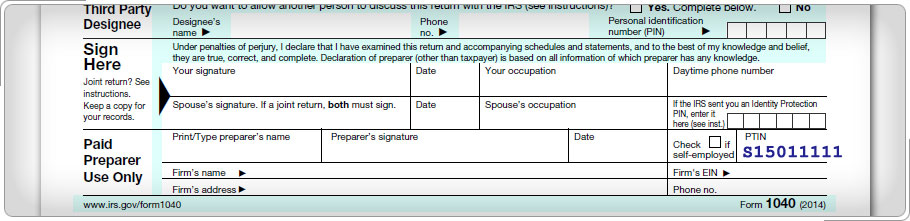
|



